Sare in the City
A portrait session in Chinatown
Sarah Bertram came to New York to build a career in musical theater. What she found instead was a second identity — DJ Sare, known for sets built around pounding bass lines and a following that keeps growing. When she came to me, the problem was straightforward: she needed photographs that could promote her gigs and fill out her social media presence. The aesthetic she had in mind was edgy, urban, and unmistakably New York.
That last part was the brief in everything but name.
I pitched several locations — Dumbo, the Lower East Side, Cortlandt Alley. She liked elements of all of them but kept coming back to Chinatown. It was the right call. Chinatown has a density that other neighborhoods don't — the signage, the layered street life, the visual noise that makes a composed subject stand out rather than disappear. It would give the images a specific address, which is what "unmistakably New York" actually means when you start working it out photographically.
Sare didn't come in with a formal brief, which is common. My job in that situation is to build the coverage myself. I knew she'd need two distinct types of images: tight portraits with enough visual impact to stop a scroll on Instagram, and wider environmental frames with deliberate negative space where she or a designer could drop in text — a venue, a date, a headline. Those are different compositional problems and they require different setups, so before Sare arrived I built a shot list that covered both: a range of focal lengths, orientations, and subject-to-environment ratios that would give her a complete and usable set by the end of the morning.
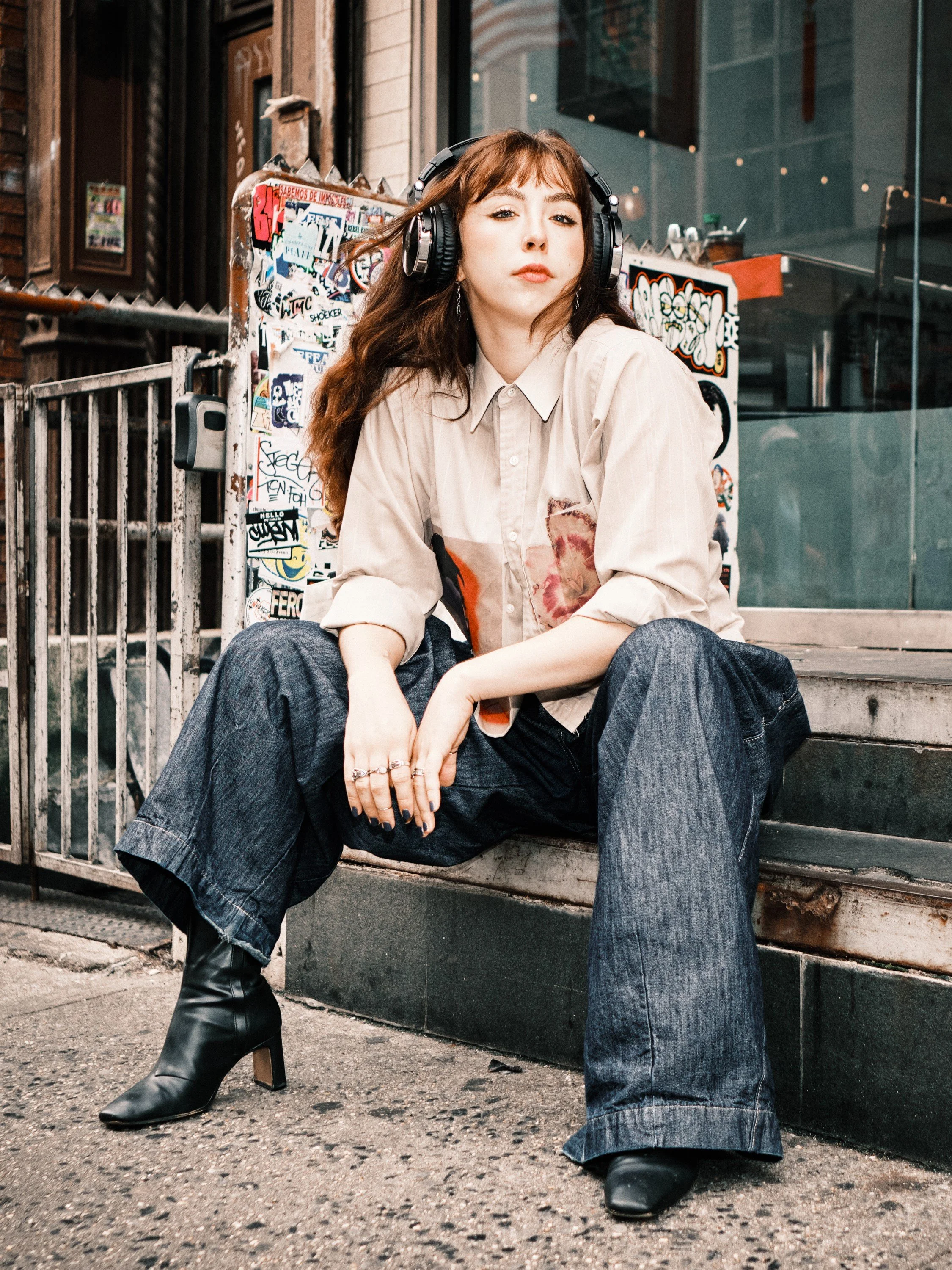
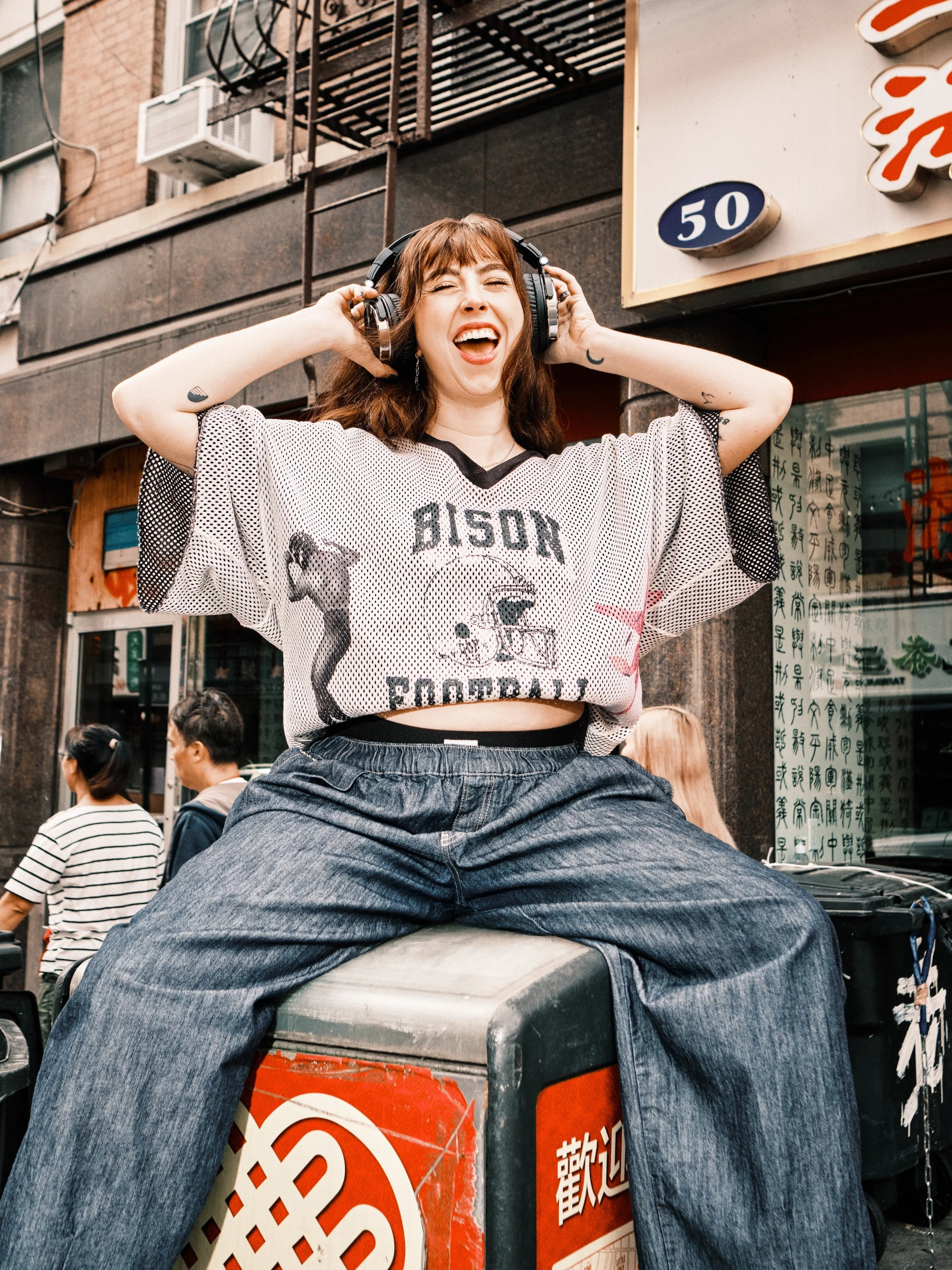
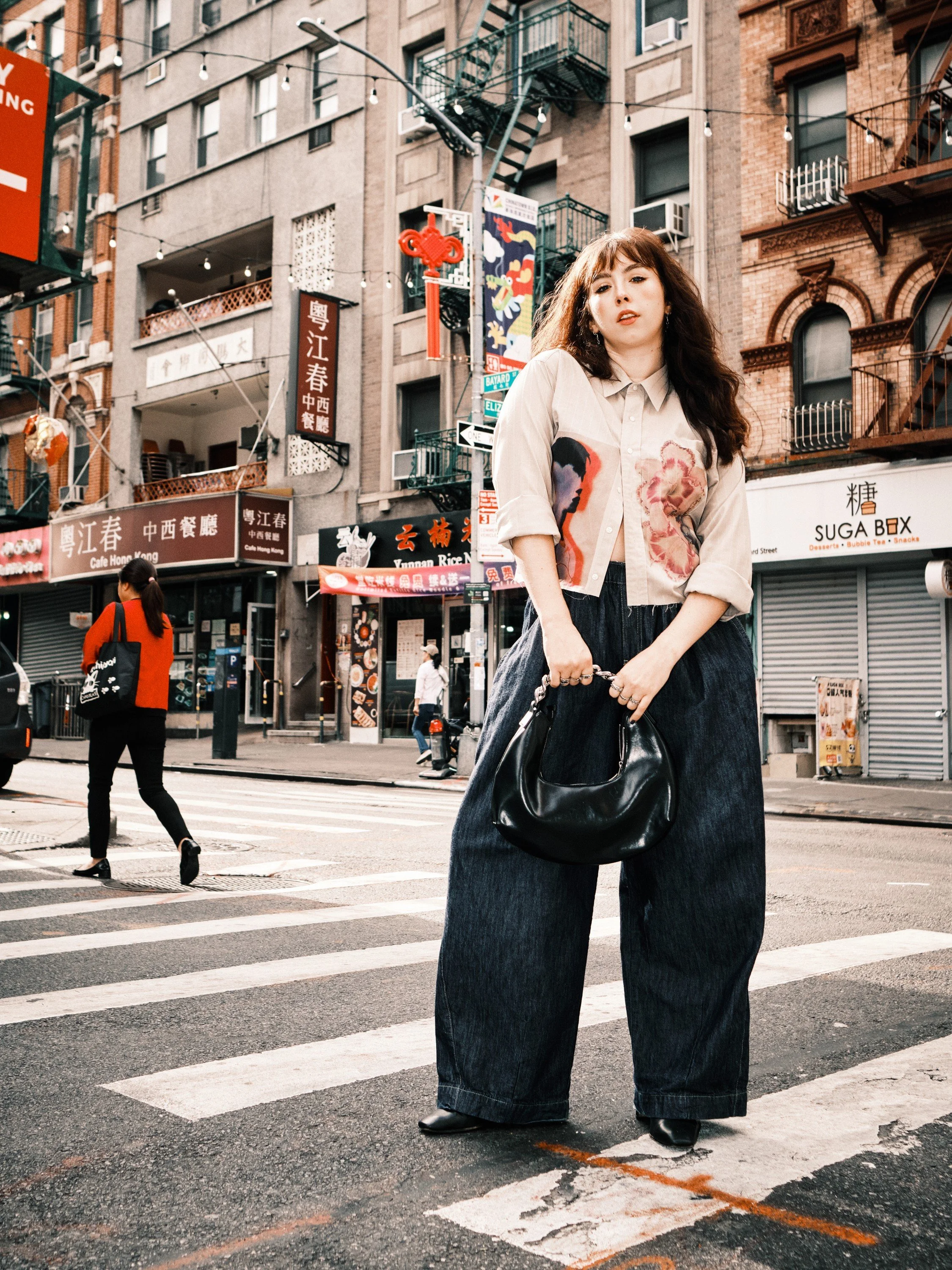
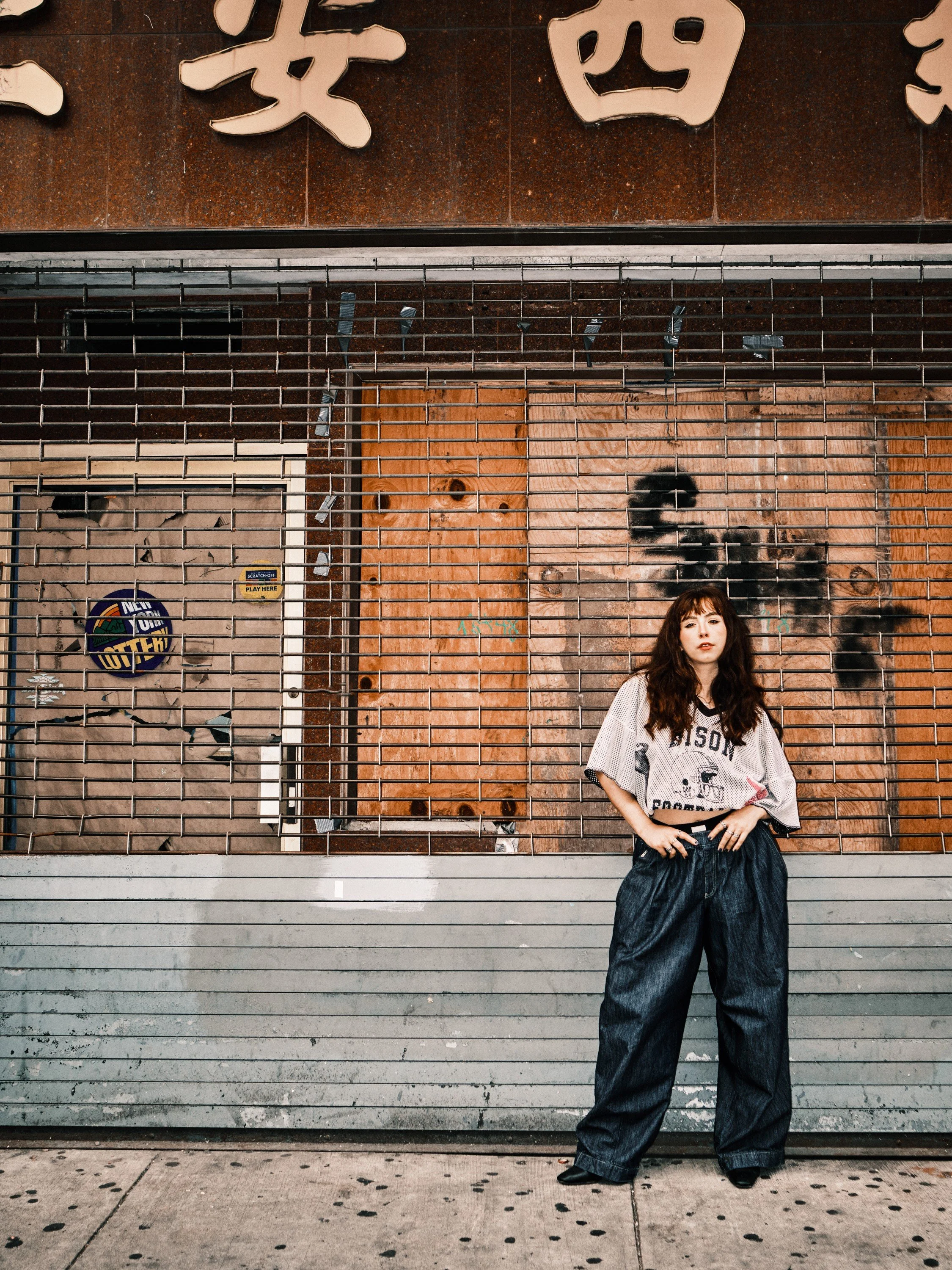
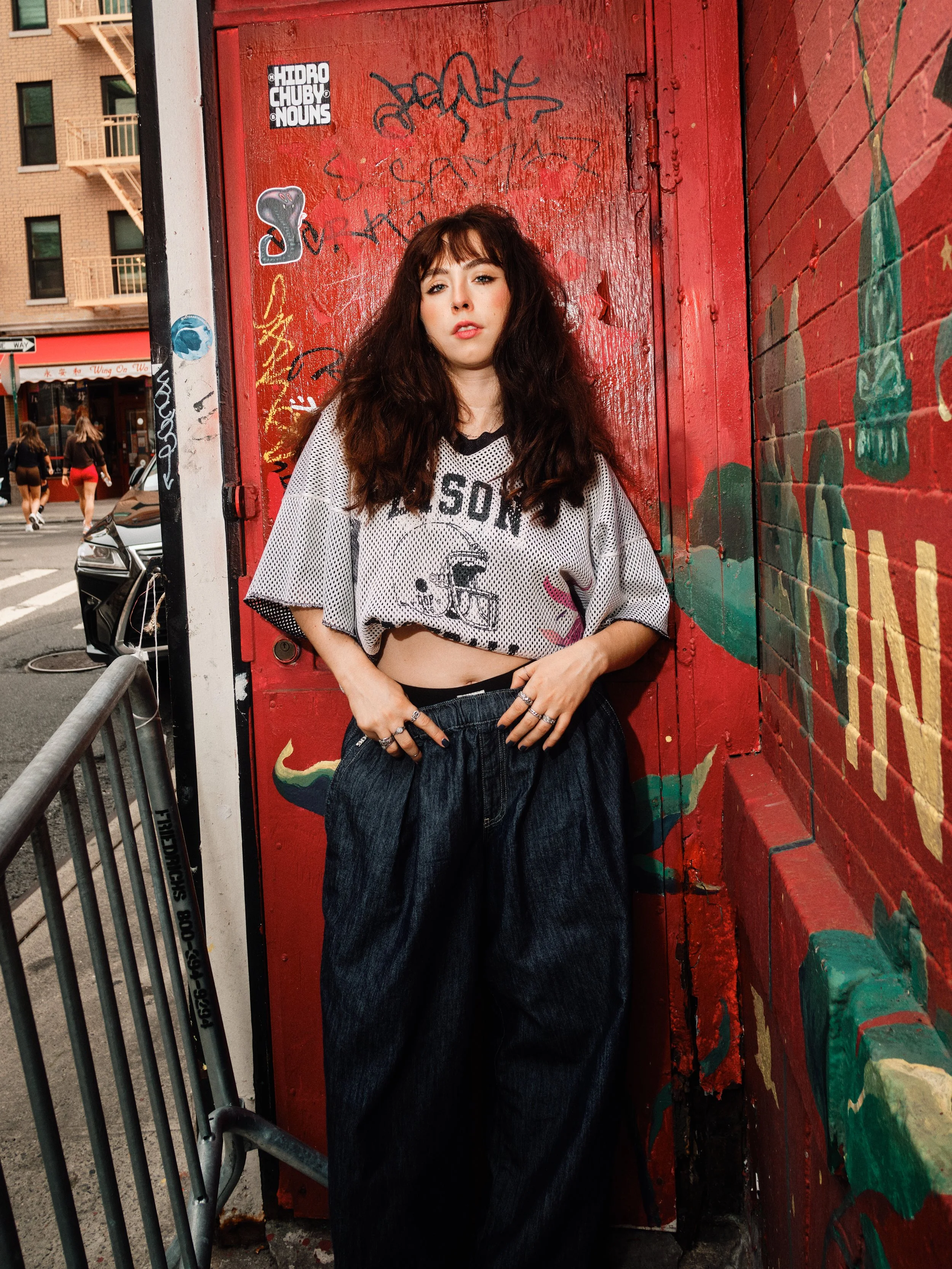
I got to Chinatown early to scout against that list. The crosswalk at Bayard gave me the wide establishing frame I needed — full street depth, the neighborhood's characteristic signage, room to breathe. The gated shopfront on Mott was an unplanned find: the rusted security gate, the Chinese characters running across the top, the upper third of the frame open and clean enough for text overlay. The red door on the side street was graphic and contained — good for the tighter portrait frames where background texture matters more than background information. The kiosk at the intersection put her above street level with the city moving behind her, which solved the problem of making one person feel significant inside a very large environment.
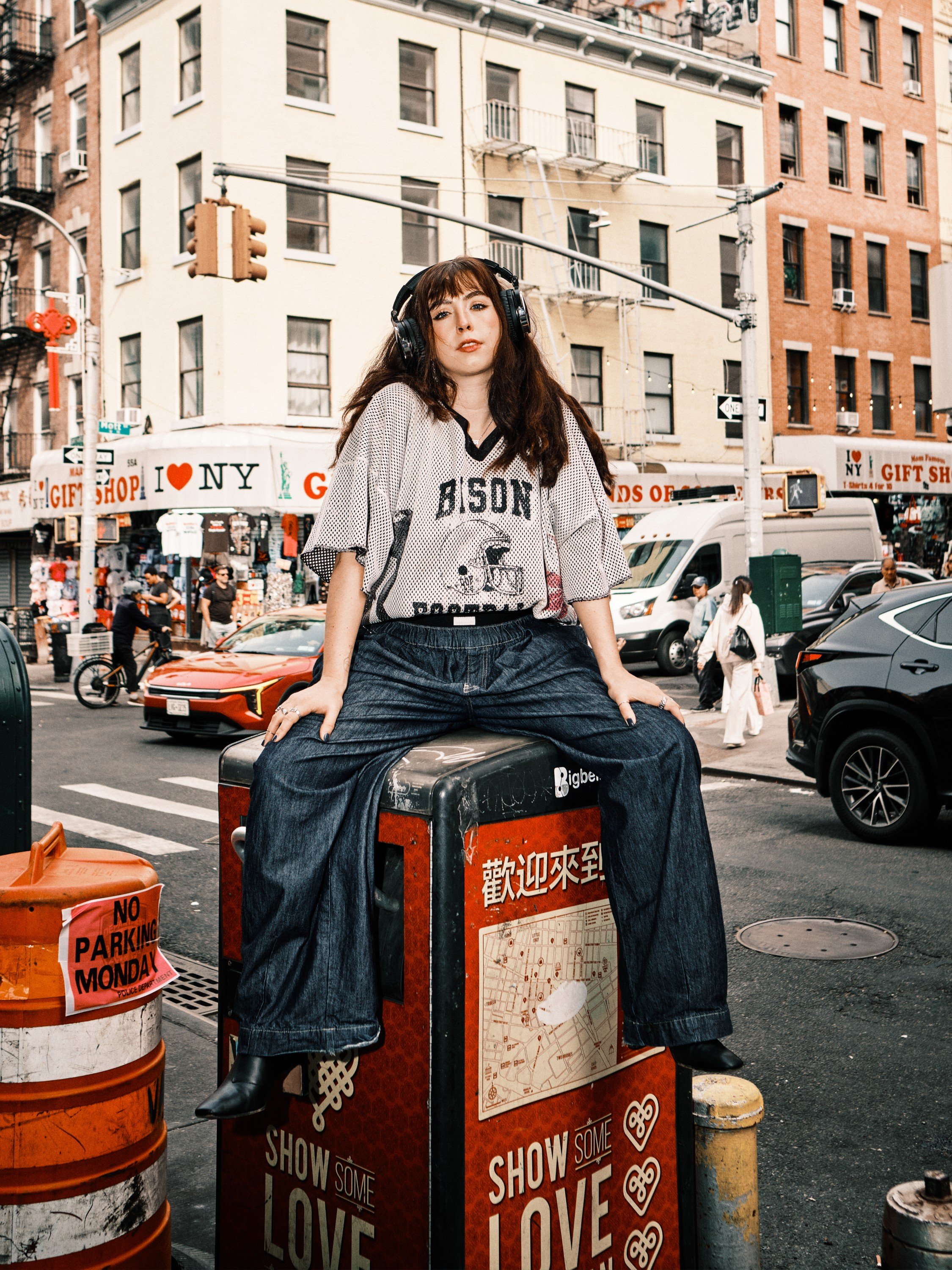
By the time Sare showed up, the location decisions were made. What remained was to put her in the environment and let her be herself. She brought the headphones — her idea, not mine, and the right one. They connected the portraits directly to her work without any explanation required.